
On camera
Do I have to be on camera? How to get comfortable on video
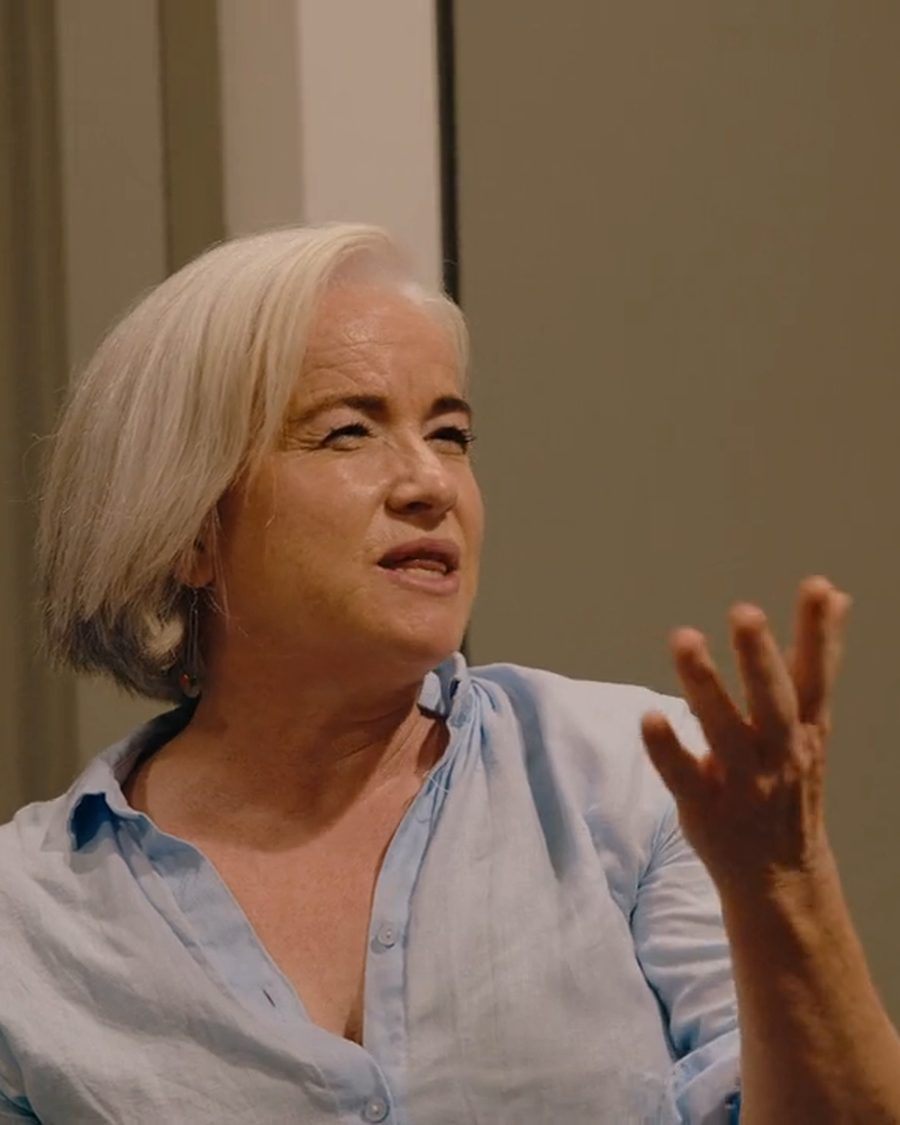
Short answer: no, you do not have to be on camera to market your business with video. You can start with a voiceover over footage of your work, move on to short pieces to camera that each answer one customer question, and later film customers telling their own story, which is often the most persuasive video a business can make. Nobody has to learn lines: a good director asks questions, you answer in your own words, and the edit does the rest.
Do I need to be on camera to market my business?
Not on day one, and for some formats not ever. Being on camera is a common worry for Irish business owners, and it usually has three parts: the owner does not want to be the face, the staff are shy or might leave, and customers will not want to be asked. Each one has a fix, and they work best in order, like a ladder: your work first, then you, then your customers.
A face and a voice build trust faster than a logo, so it is worth climbing eventually. But a well-shot video of your work is a real start, and it shows you how a shoot feels before you step in front of the lens.
How can I start with nobody on camera?
Film the work and talk over it. The footage is the job itself: the van arriving, hands on tools, the before and after, the finished room. The voiceover is you reading a short script you have approved, in a quiet room, as many times as you like. Nobody sees your face.
- Record close to the microphone, in a room with soft furnishings. A parked car works surprisingly well.
- Stand up while you read. Your voice has more energy.
- Keep each sentence short enough to say in one breath.
Some videos need no voice at all. Dream Home Co.'s stove showcase is a mood film made entirely from B-roll: a stove being lit, the flames up close, a room settling into the evening. It runs on social, in ads and on the screens in their showroom.
How do I get comfortable talking to camera?
Start with the questions you already answer on the phone every week. How long does the job take? What happens on the day? What if something goes wrong? You have given those answers a hundred times, so you are fluent before the camera is on. One question per video, 20 to 40 seconds each, and you have a series.
Work from talking points, not a word-for-word script: three bullet points on a card. Reading a full script makes most people sound like they are reading, because they are. If a line has to be exact, such as an offer, do it in short chunks: one sentence, cut, then the next, with a cutaway or a change of framing in the edit to hide the joins.
Decide where to look. Talking to someone just beside the camera feels like a conversation and suits interviews. Looking straight into the lens speaks to the viewer and suits short ads. Pick one per video.
We filmed Plantech on their stand at the Ideal Home Show in the RDS, Dublin, while the show ran. Every deliverable had a speaker and a format before the doors opened, so one day produced a 16:9 website film and fifteen vertical reels, including pieces to camera and answers to common questions.
How do I stop feeling nervous on camera?
Most nerves come from feeling you have to perform. A good director takes that pressure away with techniques from documentary work, where nobody on screen is an actor.
- Questions, not lines. You are asked something and you answer it, like any conversation.
- A warm-up first. The first few minutes are about anything except the subject: the drive in, the match at the weekend. Nerves drop once you have heard your own voice in the room.
- Full-sentence answers. The interviewer's voice is cut out, so "Why did you start the business?" needs "I started the business because…", not just "Because…".
- The same question twice. The second or third answer is often the best one, because by then you are telling it, not reciting it.
- A small room. Only the people who need to be there. Colleagues watching from the doorway make anyone freeze.
- Nothing is live. Stop, laugh, start again. Every stumble is cut in the edit.
At a Raising Films Ireland training day we recorded eleven interviews with panellists and attendees over one morning.
What should I wear for a video shoot?
- Solid, mid-tone colours. Navy, grey, green and earth tones sit well on camera.
- No fine stripes, small checks or tight patterns. They shimmer on screen, an effect called moiré.
- No large areas of bright white or very shiny fabric. Bright white loses detail and shiny fabric reflects the lights.
- No big logos from other brands. Your own branded workwear is ideal, especially if you are filmed on the job.
- Somewhere to clip a microphone. A collar, buttons or a zip near your chest for the mic, and a waistband or pocket for the small transmitter.
- Nothing that clinks. Long necklaces and bracelets knock against the mic.
- A second top, in case the first clashes with the background.
Above all, wear what you would wear to meet a customer.
How do I get staff on camera without putting them on the spot?
Ask privately, not in front of the team, and explain what the video is for, where it will run and for how long. Make "no" a genuine answer. Under GDPR, consent has to be freely given, and the European Data Protection Board's guidelines on consent say employees can only give free consent in exceptional circumstances, when it will have "no adverse consequences at all" whether or not they consent. Their own worked example is a film crew in an office, where staff who opt out are given equivalent desks elsewhere while the filming happens.
Give people roles that suit them. The shy fitter can be hands and tools in the B-roll; the natural talker can do the piece to camera. Start with whoever volunteers. Once the team sees a finished video that makes a colleague look good, others often come forward. One practical risk: consent can be withdrawn at any time, and people move jobs. Do not build every ad around one employee, and ask your production company how easily someone can be cut from a finished video. This is general information, not legal advice.
How do I get customers on camera, and what consent do I need?
Ask the customers who have already sent a thank-you or left a good review, and promise they will see the video before it goes out. Our guide to customer testimonial videos covers how to ask, the questions we use, and how to plan around the two or three hours a customer can usually give.
Get a signed release from everyone recognisable before the video is used, and from a parent or guardian for children. As well as what it is for, where it will run and for how long, say whether it will be used in paid ads or only on your own pages, and agree what you will do if the person later withdraws consent, which they can do at any time. Our FAQ has the short answer on consent for filming customers and staff in Ireland. This is general information, not legal advice.
How does Blue Motion Media work with people who would rather not be on camera?
Blue Motion Media is a Dublin video production studio with a background in documentary, so we know how to put people at ease on camera and draw out answers that sound genuine. We write the scripts, questions and shot lists before the shoot, so nobody has to prepare lines. Finished videos usually come back within 7 to 10 days of the shoot, and you own them. If you want to talk through who could appear and who would rather not, book a 30-minute strategy call and we will plan it with you.
Frequently asked questions
Can I use stock footage instead of filming my own business?
You can, but it rarely does the job for a local service business. Stock footage shows someone else's van, someone else's kitchen and someone else's staff, and many viewers can tell. For most Irish small businesses, the point of video is proof that you do good work, and only footage of your own jobs, premises and people gives that proof. If nobody wants to appear yet, film your real work and add a voiceover rather than falling back on stock.
Should I use a teleprompter when I talk to camera?
Only for short pieces where the wording has to be exact, such as an offer, and only after you have practised with one. People new to camera often sound like they are reading from a prompter, and you can sometimes see their eyes moving along the lines. For most owners, three talking points and short takes sound more natural. If you do use one, set the scroll speed to your pace, keep the lines short, and record a few takes from memory as well.
Why do I hate watching myself back on video?
Mostly because the camera shows you a version of yourself you rarely see. It shows your face the right way round, not the mirror image you see every morning, and your recorded voice sounds different from the one you hear inside your own head. Everyone else already sees and hears you that way, so to them it looks and sounds normal. The feeling usually fades after a few shoots. It also helps not to watch the monitor while filming and to leave the judging to the director.
Can an employer make staff appear in marketing videos in Ireland?
Requiring it is risky. Under GDPR, a recognisable person's image is personal data, and consent only counts if it is freely given. The European Data Protection Board says that, because of the imbalance of power, employees can only give free consent in exceptional circumstances, when saying no has no adverse consequences at all. In practice: ask, explain where the video will run, accept a no without penalty, and get a signed release from everyone who agrees. This is general information, not legal advice.
How long will I be in front of the camera on a shoot day?
Only a small part of it: the crew is on site for a half or full day, but your time on camera is the interview and a few short pieces to camera. On most shoots the crew sets up lights and sound first, clips a small microphone to your top, and starts with a few minutes of chat before the questions. Much of the rest is footage of the work going on around you. Customers can usually give two or three hours for a testimonial. At Blue Motion Media, one well-planned shoot day can give two to three months of videos, and finished edits are usually back within 7 to 10 days.
More from the blog
Want this done for your business?
Book a free 30-minute strategy call and we will map it out with you.
Book your free strategy call